
Introduction
There’s something deeply satisfying about sipping a cold, perfectly balanced coffee on a warm afternoon. The creamy texture, bold aroma, and refreshing chill can instantly improve your mood. The good news? You don’t need an expensive espresso machine or daily café visits to enjoy it.
If you’ve ever wondered how to make iced coffee at home that tastes just as good as your favorite coffee shop version, you’re in the right place. Homemade iced coffee is surprisingly simple, affordable, and customizable. Once you learn the basics, you can create café-quality drinks in your own kitchen using ingredients you probably already have.
In reality, many store-bought iced coffees are overloaded with sugar and artificial flavors. Making your own allows you to control everything—from sweetness and milk type to coffee strength and flavor notes. Whether you prefer classic black iced coffee, creamy vanilla blends, or trendy cold brew, there’s a method that suits your taste.
Another reason this topic matters is cost. Coffee shop drinks may seem harmless at first, but spending $5 to $7 daily adds up quickly. A homemade version can save hundreds of dollars every year while delivering fresher flavor.
Why Homemade Iced Coffee Is Better
Making coffee at home offers far more flexibility than most people realize. You control the quality of beans, the brewing strength, and every ingredient that goes into the glass. That alone can completely change your coffee experience.
One major advantage is freshness. Coffee begins losing aroma shortly after brewing. When you prepare it yourself, you get brighter flavors and a richer aroma compared to bottled versions sitting on store shelves for weeks.
Homemade iced coffee is also budget-friendly. A basic setup requires:
- Fresh coffee beans or ground coffee
- Ice cubes
- Milk or cream
- Sweetener if desired
- A simple brewing method
That’s it.
On the other hand, coffee chains often charge premium prices for flavored syrups, whipped cream, and specialty toppings. At home, you can experiment freely without spending extra money.
Another hidden benefit is nutrition. Many commercial iced coffees contain excessive sugar. Some large flavored drinks have over 40 grams of sugar, which is close to the recommended daily limit for adults.
By learning how to make iced coffee at home, you can create healthier drinks without sacrificing taste.
Essential Ingredients for Iced Coffee
The beauty of iced coffee lies in its simplicity. However, choosing the right ingredients makes a noticeable difference.
Coffee
Coffee is obviously the star ingredient. Medium to dark roast beans are generally preferred because they retain bold flavors even when chilled.
Popular options include:
- Colombian coffee
- Espresso roast
- French roast
- Brazilian beans
- Cold brew blends
Freshly ground beans provide the best flavor because pre-ground coffee loses aromatic oils quickly.
Ice
Ice may seem unimportant, but it affects the final drink significantly. Regular ice cubes can dilute coffee as they melt.
A clever trick is freezing leftover coffee into cubes. This keeps your drink strong and flavorful.
Milk or Cream
Milk changes the texture and body of iced coffee.
Common choices include:
| Milk Type | Flavor Profile | Texture |
|---|---|---|
| Whole Milk | Rich and creamy | Smooth |
| Oat Milk | Slightly sweet | Velvety |
| Almond Milk | Nutty and light | Thin |
| Coconut Milk | Tropical flavor | Creamy |
| Half-and-Half | Extra rich | Thick |
Sweeteners
Some people prefer unsweetened iced coffee, while others enjoy a sweeter taste.
Natural sweeteners include:
- Honey
- Maple syrup
- Brown sugar
- Coconut sugar
- Vanilla syrup
Liquid sweeteners dissolve more easily in cold drinks than granulated sugar.
Equipment You Need to Make Iced Coffee
You don’t need fancy gadgets to prepare excellent coffee.
Basic equipment includes:
- Coffee maker or French press
- Measuring spoon
- Tall glass
- Stirring spoon
- Ice tray
- Grinder (optional but recommended)
If you want more advanced options later, you can invest in:
- Espresso machine
- Milk frother
- Cold brew pitcher
- Pour-over dripper
- Digital scale
Still, beginners can achieve impressive results with minimal tools.
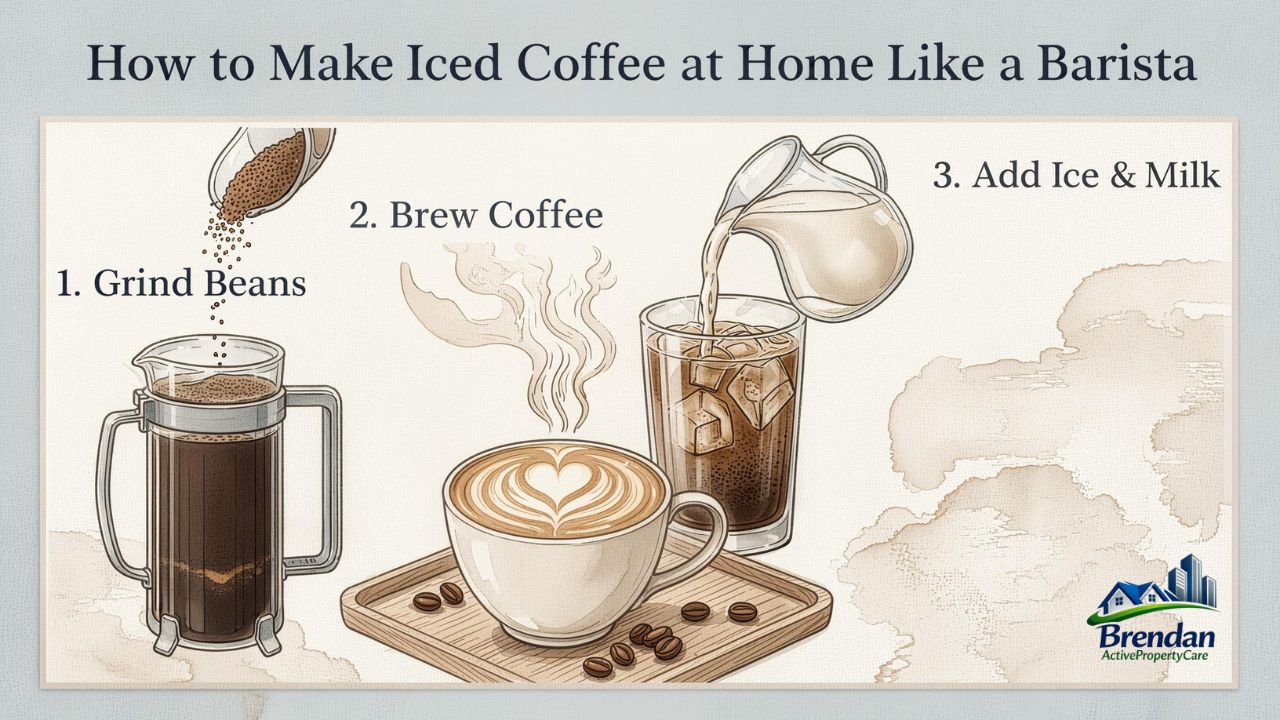
How to Make Iced Coffee at Home Step by Step
This is the easiest and most reliable method for beginners.
Step 1: Brew Strong Coffee
Start by brewing coffee slightly stronger than usual. Ice will naturally dilute the drink.
A good ratio is:
- 2 tablespoons ground coffee
- 6 ounces hot water
If using a coffee maker, simply reduce the water slightly.
Step 2: Cool the Coffee
Allow the coffee to cool for 10 to 15 minutes.
You can:
- Leave it at room temperature
- Refrigerate it
- Use an ice bath for faster cooling
Avoid pouring extremely hot coffee directly onto ice because it melts too quickly.
Step 3: Fill a Glass with Ice
Use plenty of ice cubes. A nearly full glass works best.
Coffee ice cubes are even better because they prevent watery flavor.
Step 4: Add Coffee
Pour cooled coffee slowly over the ice.
Step 5: Customize Your Drink
Add:
- Milk or cream
- Sweetener
- Flavor syrups
- Cinnamon
- Cocoa powder
- Vanilla extract
Stir well.
Step 6: Serve Immediately
Fresh iced coffee tastes best right away.
This method is ideal for busy mornings because it only takes a few minutes.
Different Brewing Methods for Iced Coffee
There isn’t just one way to prepare cold coffee. Each brewing style creates a different flavor profile.
Hot Brewed Iced Coffee
This is the fastest method and works well for everyday use.
Advantages:
- Quick preparation
- Strong flavor
- Uses standard coffee makers
Disadvantages:
- Can taste slightly bitter if over-brewed
Cold Brew Coffee
Cold brew is made by steeping coffee grounds in cold water for 12 to 24 hours.
The result is smoother and less acidic.
Basic cold brew ratio:
- 1 cup coffee grounds
- 4 cups cold water
After steeping, strain the mixture.
Cold brew concentrate can last up to one week in the refrigerator.
Espresso-Based Iced Coffee
Espresso creates bold café-style drinks.
Popular examples include:
- Iced latte
- Iced americano
- Iced caramel macchiato
Espresso shots deliver intense flavor with a rich aroma.
Pour-Over Iced Coffee
This method produces clean and bright flavor notes.
Baristas often prefer pour-over because it highlights subtle coffee characteristics.
Instant Coffee Iced Drinks
Surprisingly, instant coffee can work well in a pinch.
Mix instant coffee with a small amount of hot water before adding ice and milk.
It’s not the most premium option, but it’s fast and convenient.
Best Coffee Beans for Homemade Iced Coffee
Choosing the right beans dramatically improves flavor.
Medium Roast Beans
Medium roasts offer balanced acidity and sweetness.
They’re excellent for:
- Vanilla iced coffee
- Milk-based drinks
- Everyday iced coffee
Dark Roast Beans
Dark roasts create stronger, smokier flavor.
These work especially well for:
- Cold brew
- Espresso drinks
- Sweetened coffee recipes
Single-Origin Coffee
Single-origin beans come from one region and often contain unique flavor notes.
For example:
- Ethiopian beans may taste fruity
- Colombian beans often taste balanced and nutty
- Brazilian beans can have chocolate notes
Experimenting with beans is one of the most enjoyable parts of learning how to make iced coffee at home.
How to Sweeten Iced Coffee Naturally
Many people struggle because sugar doesn’t dissolve well in cold liquids.
Fortunately, there are better alternatives.
Simple Syrup
Simple syrup mixes perfectly into cold drinks.
To make it:
- Combine equal parts sugar and water
- Heat until dissolved
- Cool before using
You can flavor it with vanilla, cinnamon, or caramel.
Honey
Honey adds floral sweetness and depth.
However, it dissolves better if mixed with slightly warm coffee first.
Maple Syrup
Maple syrup creates rich sweetness with subtle earthy flavor.
It pairs beautifully with dark roast coffee.
Flavored Syrups
Popular options include:
- Vanilla
- Hazelnut
- Caramel
- Brown sugar
- Mocha
Use flavored syrups sparingly to avoid overpowering the coffee itself.
Milk Options for Creamy Iced Coffee
Milk changes both texture and taste.
Dairy Milk
Whole milk creates the richest texture.
Skim milk works for lighter drinks but feels less creamy.
Oat Milk
Oat milk has become extremely popular because of its smooth consistency.
It froths well and complements coffee naturally.
Almond Milk
Almond milk adds a slightly nutty flavor while keeping calories low.
Coconut Milk
Coconut milk creates tropical flavor and works especially well in sweet iced coffee recipes.
Soy Milk
Soy milk contains more protein than many plant-based alternatives and produces a creamy consistency.
Common Mistakes That Ruin Iced Coffee
Even simple recipes can go wrong.
Using Weak Coffee
Weak coffee becomes watery immediately after ice melts.
Always brew stronger than normal.
Pouring Hot Coffee Directly Over Ice
This melts the ice too quickly and creates diluted flavor.
Using Old Coffee Beans
Stale beans produce flat, lifeless coffee.
Fresh beans dramatically improve taste.
Adding Too Much Sweetener
Excess sugar can overpower natural coffee flavor.
Start small and adjust gradually.
Ignoring Coffee-to-Water Ratio
Precision matters more than many people realize.
Too much water creates bland coffee, while too little creates bitterness.
Creative Iced Coffee Variations to Try
Once you master the basics, you can start experimenting.
Vanilla Iced Coffee
Add:
- Vanilla syrup
- Milk
- Ice
This classic recipe tastes smooth and comforting.
Mocha Iced Coffee
Mix coffee with chocolate syrup or cocoa powder.
Top with whipped cream for dessert-like flavor.
Caramel Iced Coffee
Drizzle caramel sauce inside the glass before pouring coffee.
The result feels luxurious and café-inspired.
Protein Iced Coffee
Fitness enthusiasts often combine coffee with protein shakes.
This works well as a post-workout drink.
Vietnamese-Style Iced Coffee
Vietnamese coffee uses sweetened condensed milk for rich sweetness.
It’s bold, creamy, and intensely satisfying.
Cinnamon Honey Iced Coffee
A small amount of cinnamon creates warmth and complexity.
Honey adds natural sweetness without refined sugar.
Health Benefits of Homemade Iced Coffee
Coffee isn’t just delicious. It also offers several potential health benefits when consumed in moderation.
Rich in Antioxidants
Coffee contains antioxidants that help protect cells from oxidative stress.
Increased Mental Focus
Caffeine improves alertness and concentration.
That’s one reason many people rely on coffee during work or study sessions.
Lower Sugar Intake
Homemade versions usually contain less sugar than coffee shop drinks.
This supports healthier eating habits.
Better Ingredient Control
You decide:
- Sugar level
- Milk type
- Flavorings
- Portion size
That level of control makes homemade coffee healthier overall.
Potential Metabolism Support
Some research suggests caffeine may slightly increase metabolic rate.
However, moderation remains important.
Cost Comparison: Homemade vs Coffee Shop Drinks
Coffee shop drinks may seem affordable individually, but regular purchases add up fast.
| Type | Average Cost Per Drink | Monthly Cost |
| Coffee Shop Iced Coffee | $5 | $150 |
| Homemade Iced Coffee | $1 | $30 |
That’s a potential savings of over $1,400 annually.
Learning how to make iced coffee at home can genuinely improve your budget without sacrificing quality.
Storing and Preparing Iced Coffee Ahead of Time
Meal prep isn’t just for food.
Coffee preparation can save time during busy mornings.
Refrigerate Brewed Coffee
Store brewed coffee in an airtight container for up to 3 days.
Make Cold Brew Concentrate Weekly
Cold brew stays fresh longer than traditional brewed coffee.
Freeze Coffee Cubes
Coffee ice cubes preserve flavor while chilling drinks.
Prepare Flavor Syrups in Advance
Homemade syrups can last for weeks in the refrigerator.
This makes morning coffee preparation incredibly fast.
The Science Behind Great Iced Coffee Flavor
Coffee flavor comes from hundreds of aromatic compounds released during brewing.
Temperature changes how these compounds are perceived.
Hot coffee emphasizes aroma, while cold coffee highlights sweetness and smoothness.
That’s why cold brew often tastes naturally sweeter despite containing no added sugar.
Acidity also changes with temperature. Cold brewing extracts fewer acidic compounds, producing a smoother flavor profile.
Understanding this science helps explain why brewing method matters so much.
Seasonal Trends and Why Iced Coffee Keeps Growing
Iced coffee has exploded in popularity worldwide.
Younger consumers especially prefer chilled coffee beverages because they feel refreshing, customizable, and social-media friendly.
Many coffee chains now earn a significant percentage of summer beverage sales from iced drinks.
Social media platforms like TikTok and Instagram have also influenced trends such as:
- Whipped coffee
- Brown sugar shaken espresso
- Protein coffee
- Salted caramel cold brew
- Matcha coffee fusion drinks
Still, homemade versions remain more affordable and often taste fresher.
How Cafés Make Iced Coffee Taste Better
Many people assume cafés use secret ingredients.
In reality, their biggest advantages are consistency and freshness.
Professional baristas focus heavily on:
- Accurate brewing ratios
- High-quality beans
- Filtered water
- Proper ice quantity
- Balanced sweetness
You can replicate these techniques at home surprisingly easily.
Filtered water alone can noticeably improve flavor because coffee is mostly water.
Fresh grinding beans immediately before brewing is another game changer.
Pairing Iced Coffee with Food
The right snack can elevate the entire coffee experience.
Excellent pairings include:
- Chocolate croissants
- Banana bread
- Blueberry muffins
- Cinnamon rolls
- Butter cookies
- Avocado toast
Dark roast iced coffee pairs especially well with chocolate desserts.
Lighter roasts complement fruity pastries and breakfast foods.
How to Create a Coffee Shop Experience at Home
Part of the joy of café visits comes from atmosphere.
You can recreate that feeling at home by focusing on small details.
Try:
- Using clear glass cups
- Adding reusable straws
- Playing relaxing music
- Creating a coffee corner in your kitchen
- Experimenting with latte art
These little rituals make homemade coffee feel special rather than routine.
FAQ
Can I use instant coffee for iced coffee?
Yes, instant coffee works surprisingly well for quick iced coffee recipes. Dissolve it in a small amount of hot water first for smoother texture.
How long does homemade iced coffee last?
Brewed coffee generally lasts 2 to 3 days in the refrigerator, while cold brew concentrate can last up to one week.
What is the difference between iced coffee and cold brew?
Iced coffee is usually brewed hot and chilled, while cold brew is steeped slowly in cold water for many hours.
What milk tastes best in iced coffee?
Whole milk and oat milk are popular because they create creamy texture and balanced flavor.
Why does my iced coffee taste watery?
This usually happens when coffee is brewed too weak or poured hot over too much ice.
Can I make iced coffee without a coffee machine?
Absolutely. A French press, pour-over dripper, or even instant coffee can produce excellent results.
Is homemade iced coffee healthier?
In many cases, yes. Homemade drinks usually contain less sugar and fewer artificial ingredients than store-bought versions.
What coffee roast is best for iced coffee?
Medium and dark roasts generally work best because they maintain bold flavor when chilled.
Can I prepare iced coffee the night before?
Yes. Many people brew coffee in advance and refrigerate it overnight for faster morning preparation.
Conclusion
Making café-style coffee at home isn’t nearly as complicated as it seems. With quality beans, the right brewing method, and a few simple techniques, you can create refreshing iced coffee that rivals expensive coffee shop drinks.
More importantly, homemade coffee allows you to personalize every detail. Whether you prefer bold black coffee, creamy vanilla flavors, or smooth cold brew, the possibilities are almost endless.
Once you truly understand how to make iced coffee at home, your daily routine changes in a surprisingly enjoyable way. Mornings become easier, afternoons feel more refreshing, and your wallet will probably thank you too.
So grab your favorite coffee beans, fill a glass with ice, and start experimenting. Your perfect homemade iced coffee might be only a few minutes away.