
Introduction
There is something strangely comforting about revisiting a movie that captures the awkward excitement of youth, late-night adventures, and the feeling that life could change in a single evening. Take me home tonight (film) taps into that emotion with surprising honesty, even while wrapping it inside a colorful 1980s comedy.
Released in 2011 but set during the late 1980s, the movie blends romance, friendship, ambition, and nostalgia into a story that feels familiar to anyone who has ever wondered if they were falling behind in life. While critics had mixed reactions, audiences slowly embraced its relatable characters, energetic soundtrack, and carefree atmosphere.
What makes the film memorable is not just the neon lights or synth-heavy music. In reality, it is the emotional uncertainty beneath the comedy. The story explores fear of adulthood, social pressure, and the desperate need to appear successful. Those themes still resonate today, especially with viewers navigating career confusion and complicated relationships.
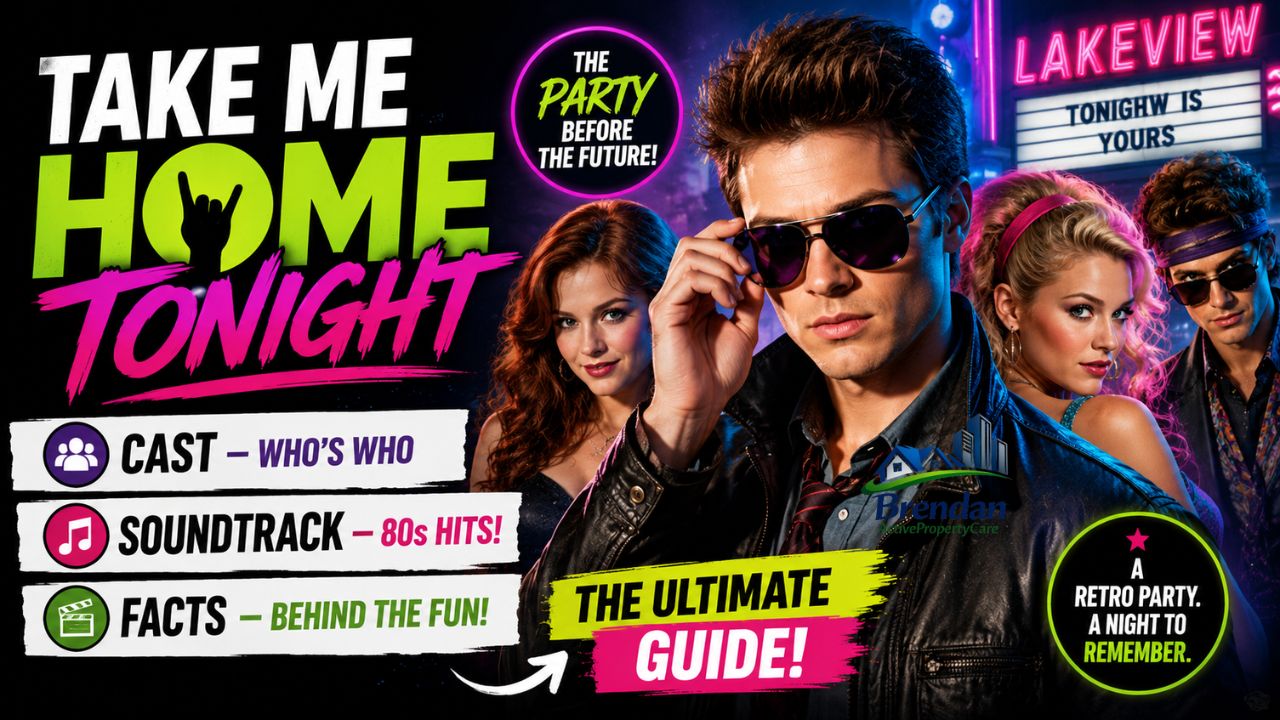
This article takes a deep dive into the cast, plot, soundtrack, behind-the-scenes details, financial performance, and cultural impact of the movie. Whether you are revisiting it for nostalgia or discovering it for the first time, there is more to appreciate than you might expect.
The Story Behind the Movie
A Comedy Built Around Nostalgia
The idea behind take me home tonight (film) was simple but effective: create a coming-of-age comedy that captures the chaotic feeling of young adulthood in the late 1980s. Instead of relying entirely on exaggerated humor, the film mixed emotional vulnerability with party-driven comedy.
The title itself comes from Eddie Money’s hit song “Take Me Home Tonight,” which perfectly reflects the mood of the movie. Interestingly, the soundtrack was one of the earliest elements developed during production because the filmmakers wanted music to shape the emotional tone.
The movie was directed by Michael Dowse and written by Jackie Filgo and Jeff Filgo. Their goal was to create a story that felt authentic rather than overly polished. That slightly messy energy became part of the film’s charm.
Why the 1980s Setting Works So Well
The late 1980s setting gives the film a unique identity. Unlike many nostalgic movies that rely entirely on fashion jokes or pop-culture references, this story uses the decade as an emotional backdrop.
Here are a few reasons the setting works:
- No smartphones or social media, making personal interactions more genuine
- Career uncertainty feels more intense without digital opportunities
- House parties become central social experiences
- The soundtrack naturally drives emotional moments
- Fashion and humor add visual personality without dominating the story
The result feels immersive rather than forced.
Plot Overview and Main Themes
A Night That Changes Everything
The story follows Matt Franklin, a recent MIT graduate who appears intelligent and capable but secretly feels directionless. Instead of pursuing a prestigious career, he works at a video store while avoiding difficult conversations about his future.
Everything changes when he reconnects with his high school crush, Tori Frederking, during a Labor Day weekend party. Hoping to impress her, Matt pretends he works in finance at Goldman Sachs. From there, the night spirals into a series of chaotic events involving lies, friendships, romance, and self-discovery.
The movie unfolds almost like a long emotional confession disguised as a comedy. Matt’s biggest struggle is not romance. It is fear. He fears disappointing people, making the wrong choices, and admitting he does not have life figured out.
Themes That Still Feel Relevant
Although the movie is set decades ago, its emotional themes remain surprisingly modern.
Fear of Adulthood
Many viewers connect with Matt because he represents people stuck between education and real adulthood. He is talented but overwhelmed by expectations.
Social Pressure
The film explores how people exaggerate success to gain approval. Matt lies about his career because he believes honesty will make him look like a failure.
Friendship and Loyalty
Friendships drive many of the emotional moments. Barry, Matt’s energetic best friend, provides chaos and comedy, but he also reveals deep loyalty.
Romantic Idealism
The romance feels imperfect rather than fantasy-driven. That realism gives the story emotional weight.
Cast and Characters
Topher Grace as Matt Franklin
Topher Grace delivers one of the most relatable performances of his career. Matt is intelligent, awkward, insecure, and painfully human.
Grace also served as one of the film’s producers, which explains why the character feels carefully developed. Instead of portraying Matt as a stereotypical loser, the performance highlights emotional uncertainty and quiet desperation.
Anna Faris as Wendy Franklin
Anna Faris brings tremendous comedic energy to the film. Wendy, Matt’s twin sister, is ambitious, impulsive, and emotionally reckless.
Her storyline adds unpredictability to the movie. Faris balances outrageous comedy with genuine vulnerability, making Wendy more than just comic relief.
Dan Fogler as Barry Nathan
Barry became one of the movie’s breakout characters. Loud, unpredictable, and deeply emotional, he steals multiple scenes.
Many fans still remember:
- The iconic car sequence
- His intense emotional speeches
- His reckless confidence
- His loyalty to Matt
Dan Fogler’s performance helped the character gain cult popularity among comedy fans.
Teresa Palmer as Tori Frederking
Tori could have easily become a one-dimensional romantic interest. Instead, Teresa Palmer gives the character warmth and realism.
Tori sees through Matt’s insecurity more quickly than he realizes. Her grounded personality balances the movie’s chaotic energy.
Supporting Cast Highlights
The supporting cast also deserves recognition.
| Actor | Character | Contribution |
|---|---|---|
| Chris Pratt | Kyle Masterson | Adds hilarious arrogance and confidence |
| Michelle Trachtenberg | Kitchelle Storms | Creates emotional tension and comedy |
| Michael Biehn | Bill Franklin | Represents parental expectations |
| Lucy Punch | Shelly | Adds eccentric humor |
The ensemble chemistry helps the film feel lively and spontaneous.
Why take me home tonight (film) Became a Cult Favorite
The Soundtrack Carries the Emotion
One of the biggest strengths of take me home tonight (film) is its soundtrack. Music does more than create nostalgia. It drives emotional momentum.
Songs from the 1980s help scenes feel energetic, emotional, romantic, or bittersweet without becoming overly sentimental.
Popular tracks include:
- “Take Me Home Tonight” by Eddie Money
- “Safety Dance” by Men Without Hats
- “Straight Up” by Paula Abdul
- “Dancing with Myself” by Billy Idol
- “Don’t You Forget About Me” by Simple Minds
The soundtrack became a major reason audiences revisited the movie.
Emotional Authenticity Beneath the Comedy
Many comedies from the late 2000s focused heavily on outrageous humor. This movie took a slightly different approach.
Instead of nonstop jokes, it allowed emotional pauses. Characters experienced embarrassment, regret, insecurity, and disappointment in believable ways.
That emotional honesty helped the film build a loyal fan base over time.
Production Journey and Release Delays
A Long Road to Release
One of the most interesting facts about take me home tonight (film) is its complicated production history.
The movie was actually filmed in 2007 but was not released until 2011. Several factors contributed to the delay, including studio uncertainty about marketing and concerns about audience interest in retro comedies.
This delay created unusual challenges:
- Cast members became more famous before release
- The comedy landscape changed significantly
- Audience expectations evolved
- Marketing strategies had to be adjusted repeatedly
By the time the movie arrived in theaters, several actors had already advanced to bigger mainstream projects.
Filming Locations and Visual Style
The filmmakers embraced bright neon lighting, retro interiors, and energetic party scenes to recreate the late 1980s atmosphere.
Many scenes were filmed in California, where production teams carefully recreated suburban American nightlife from the era.
The visual style intentionally avoids looking overly polished. Instead, it feels slightly chaotic and warm, which matches the emotional tone of the story.
Critical Reception and Audience Response
Critics Had Mixed Opinions
When the film was released, critics were divided. Some reviewers appreciated the nostalgic atmosphere and cast chemistry, while others criticized the familiar storyline.
Common criticisms included:
- Predictable romantic structure
- Reliance on nostalgia
- Uneven pacing
- Conventional comedy elements
However, even negative reviews often praised the cast performances and soundtrack.
Audiences Connected More Deeply
Interestingly, audience reactions were often more positive than critical reviews.
Many viewers related to:
- Career uncertainty after graduation
- Fear of disappointing parents
- Romantic awkwardness
- Social anxiety
- The pressure to appear successful
As streaming platforms expanded, the movie found a larger audience. Over time, people began revisiting it as a comfort movie rather than just another comedy release.
Box Office Performance and Financial Insights
Commercial Performance
Financially, the movie delivered modest results rather than blockbuster success.
| Category | Estimated Figure |
| Production Budget | Around $19 million |
| Worldwide Gross | Around $14 million |
| Release Year | 2011 |
Although it underperformed theatrically, the film later gained value through streaming, rentals, and home entertainment.
Long-Term Value Through Cult Status
Cult films often develop financial longevity after theatrical release, and this movie followed that pattern.
Several factors contributed to its lasting popularity:
- Strong replay value
- Nostalgic soundtrack appeal
- Relatable emotional themes
- Popular cast members
- Memorable comedy sequences
Movies do not always need massive opening weekends to leave a cultural impression.
Career Growth of the Main Cast
Topher Grace’s Career Journey
Before the film, Topher Grace was already known for “That ’70s Show.” However, this movie allowed him to explore a more emotionally layered comedic role.
His career later expanded into:
- Drama performances
- Producing projects
- Psychological thrillers
- Streaming television series
Estimated net worth reports in entertainment media often place Grace in the multi-million-dollar range due to acting, production work, and long-running television success.
Anna Faris and Comedy Stardom
Anna Faris had already become a comedy favorite through the “Scary Movie” franchise. Her role here reinforced her reputation for fearless comedic performances.
Beyond film, she built success through:
- Voice acting
- Podcasting
- Television work
- Book publishing
Her career longevity reflects her versatility and strong audience connection.
Chris Pratt Before Global Fame
One fascinating aspect of take me home tonight (film) is seeing Chris Pratt before his rise to international superstardom.
Years later, Pratt became one of Hollywood’s biggest action stars through franchises like:
- Guardians of the Galaxy
- Jurassic World
- The Super Mario Bros. Movie
Watching his early comedic performance now feels almost surreal.
Memorable Scenes and Fan Favorites
The Car Scene Everyone Remembers
Without spoiling every detail, one particular car-related sequence became legendary among fans.
The scene combines:
- Physical comedy
- Emotional chaos
- Friendship dynamics
- Unexpected absurdity
It perfectly captures the movie’s tone.
The Party Atmosphere
House-party movies often feel repetitive, but this film creates an atmosphere that feels energetic without becoming exhausting.
The party scenes include:
- Dance-floor awkwardness
- Romantic tension
- Career anxiety discussions
- Wild comedic disasters
These moments feel recognizable to anyone who remembers uncertain early adulthood.
Quiet Emotional Conversations
Some of the best moments are surprisingly calm.
Conversations between Matt and Tori reveal:
- Fear of failure
- Personal insecurity
- Missed opportunities
- Emotional honesty
Those quieter scenes help balance the movie’s louder comedy.
Cultural Legacy and Modern Relevance
Why Younger Audiences Still Discover It
Even younger viewers who never experienced the 1980s continue finding the movie through streaming platforms.
Why does it still work?
- Career uncertainty remains universal
- Romantic insecurity never disappears
- Friendship dynamics feel timeless
- The soundtrack remains entertaining
- Nostalgia itself has become culturally popular
The emotional core matters more than the decade.
A Reflection of Post-College Anxiety
One reason take me home tonight (film) resonates emotionally is because it captures the strange emotional gap between graduation and adulthood.
Many people experience:
- Confusion about career goals
- Pressure from family
- Fear of being left behind
- Difficulty defining success
The movie presents those struggles through humor instead of heavy drama.
The Film’s Place in Modern Comedy
The movie now occupies an interesting position in comedy history.
It arrived during a transitional period when:
- Raunchy comedies dominated theaters
- Nostalgia-driven entertainment was expanding
- Character-focused humor was becoming more popular
While it never reached blockbuster status, it gradually earned respect as an emotionally grounded comedy.
FAQs
What is take me home tonight (film) about?
The movie follows recent college graduate Matt Franklin as he navigates romance, friendship, and career anxiety during one chaotic night in the late 1980s.
Is take me home tonight (film) based on a true story?
No, the story is fictional. However, many emotional experiences and social situations feel realistic and relatable.
Why was the movie delayed for several years?
The film faced marketing and distribution challenges after production. It was filmed in 2007 but released in 2011.
Who sings the song “Take Me Home Tonight”?
The song was originally performed by Eddie Money and became one of the defining musical elements connected to the movie.
Did the movie perform well at the box office?
The theatrical performance was modest. However, the movie later gained popularity through streaming services and home viewing.
Who is the funniest character in the movie?
Many fans consider Barry Nathan, played by Dan Fogler, to be the funniest and most memorable character.
Is the movie appropriate for family viewing?
The film contains mature humor, language, drinking, and adult themes, making it more suitable for older teens and adults.
Why do audiences still enjoy the movie today?
Viewers connect with its emotional honesty, nostalgic atmosphere, relatable struggles, and energetic soundtrack.
Conclusion
Some movies become classics because they dominate the box office. Others earn loyalty slowly through emotional connection and repeat viewings. take me home tonight (film) belongs firmly in the second category.
Its combination of awkward romance, career uncertainty, wild comedy, and nostalgic music creates an experience that feels both entertaining and surprisingly personal. Beneath the neon lights and party scenes is a story about fear, identity, and the uncomfortable transition into adulthood.
Years after its release, the film continues attracting audiences who see parts of themselves in Matt, Wendy, Barry, and Tori. That emotional relatability is ultimately why the movie still matters.
For viewers looking for a comedy with heart, memorable music, and genuine emotional honesty, this film remains an underrated favorite worth revisiting.