

Introduction
A living room rug can quietly make or completely break your space—and most people don’t even realize it until something feels “off.” It’s not just decor; it’s the anchor that ties your entire room together.
Think about it: your furniture, colors, lighting—everything sits on or around it. Choosing the wrong rug leads to awkward layouts, mismatched aesthetics, and a room that feels unfinished. But when you get it right, the transformation is immediate.
This matters because your living room is where life happens—guests, relaxation, conversations, even work. A well-chosen living room rug doesn’t just look good; it changes how the space feels and functions.
Let’s break it down properly so you don’t waste money on something that ends up being replaced in six months.
Why a living room rug Is the Foundation of Your Space
A rug isn’t an accessory—it’s the base layer of your design. Everything else builds on top of it.
What a Rug Actually Does
- Defines the seating area
- Adds warmth and comfort
- Improves acoustics
- Introduces texture and contrast
- Connects furniture visually
Without a proper living room rug, your furniture can look like it’s floating randomly in space.
The Biggest Mistake People Make
Most people buy a rug based on looks alone. That’s lazy thinking.
You should be choosing based on:
- Room size
- Furniture layout
- Foot traffic
- Lifestyle (kids, pets, etc.)
If you ignore these, you’ll regret it.


Choosing the Right Size for Your living room rug
This is where most people mess up badly.
Standard Rug Size Guidelines
- Small (5×7 ft): Only works under coffee table (rarely ideal)
- Medium (8×10 ft): Best for most average living rooms
- Large (9×12 ft or bigger): Ideal for open layouts
The Golden Rule
Your rug should be big enough that:
- At least the front legs of all furniture sit on it
- Or ideally, all furniture fits entirely on it
If your living room rug is too small, your room will look cheap—no matter how expensive everything else is.
Types of living room rug Styles
Your rug style sets the tone. Choose wrong, and everything clashes.
1. Modern Rugs
Clean lines, minimal patterns, neutral tones.
Best for:
- Contemporary homes
- Minimalist aesthetics
2. Traditional Rugs
Detailed patterns, rich colors.
Best for:
- Classic interiors
- Formal living rooms
3. Bohemian Rugs
Layered, textured, often colorful.
Best for:
- Creative, relaxed spaces
4. Shag Rugs
Soft, fluffy, high-pile.
Best for:
- Comfort-focused spaces (but harder to clean)


Materials Matter More Than You Think
You can’t just pick what “looks nice.” Material affects durability, comfort, and maintenance.
Common Rug Materials
Wool
- Durable
- Naturally stain-resistant
- Expensive but worth it
Synthetic (Polypropylene, Nylon)
- Affordable
- Easy to clean
- Less luxurious
Cotton
- Lightweight
- Budget-friendly
- Less durable
Natural Fibers (Jute, Sisal)
- Eco-friendly
- Textured look
- Rough underfoot
If your living room rug doesn’t match your lifestyle, it won’t last.
How to Match Your Rug with Furniture
This is where design becomes strategy.
Color Coordination
You don’t need everything matching. That’s amateur thinking.
Instead:
- Use rug colors to complement—not copy—your sofa
- Pull tones from cushions, art, or curtains
Pattern Balance
- Busy rug → simple furniture
- Simple rug → bold furniture
Contrast is Key
A dark sofa on a dark rug? That’s just bad design.
Your living room rug should create visual separation.
Placement Techniques That Actually Work
Layout Options
1. All Legs On Rug
Best for large rooms.
2. Front Legs Only
Most common and practical.
3. Coffee Table Only
Avoid unless space is very tight.
Spacing Rules
- Leave 6–12 inches between rug and wall
- Center it under the main seating area
Bad placement ruins even the best living room rug.
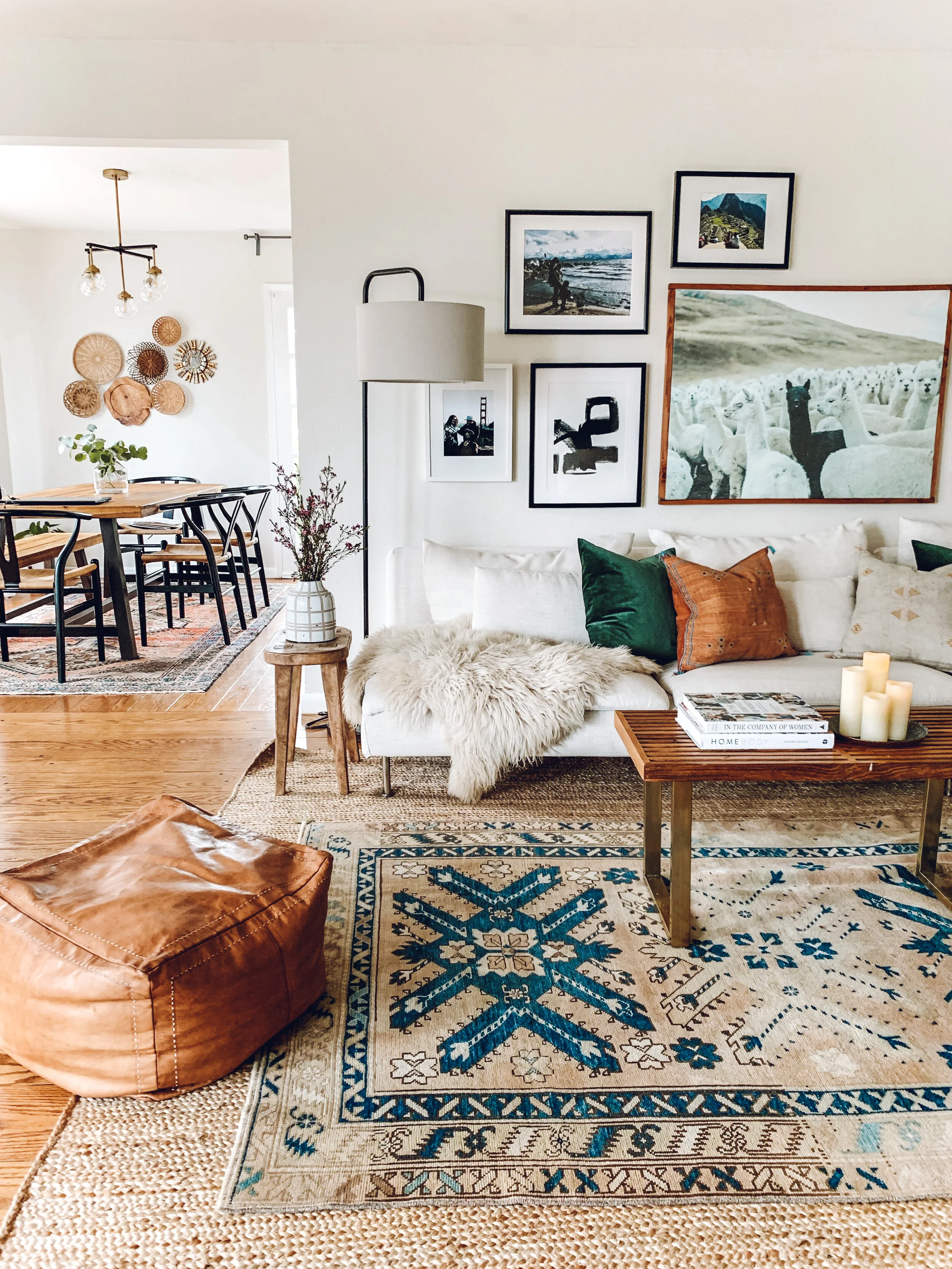
Layering Rugs Like a Pro
Layering isn’t just trendy—it’s functional.
Why Layer?
- Adds depth
- Covers larger areas affordably
- Creates visual interest
How to Do It Right
- Base layer: neutral, large
- Top layer: smaller, patterned
Example:
- Jute rug base
- Vintage patterned rug on top

Maintenance: Keep It Looking Expensive
A dirty rug ruins everything.
Basic Care Tips
- Vacuum weekly
- Rotate every 3–6 months
- Clean spills immediately
Deep Cleaning
- Wool: professional cleaning
- Synthetic: DIY-friendly
If you don’t maintain your living room rug, it will age fast—and visibly.
Budget vs Quality: Where to Spend
Let’s be blunt—cheap rugs often look cheap.
When to Invest
- High-traffic living rooms
- Statement pieces
- Long-term use
When to Save
- Temporary setups
- Low-use spaces
Think long-term. Replacing a bad rug twice costs more than buying a good one once.
Common Mistakes You Should Avoid
- Buying too small
- Ignoring material quality
- Matching everything too perfectly
- Choosing based on trend only
- Forgetting maintenance
Every one of these mistakes weakens your living room rug impact.
FAQ
Frequently Asked Questions
What size living room rug should I get?
Choose a size that allows at least the front legs of your furniture to sit on it. Bigger is usually better.
How often should I clean my rug?
Vacuum weekly and deep clean every 6–12 months depending on usage.
Are expensive rugs worth it?
Yes, if you want durability and long-term value. Cheap rugs wear out quickly.
Can I layer rugs in a small living room?
Yes, but keep the base neutral and avoid overcrowding the space.
What color rug is best for a living room?
Neutral tones are safest, but bold colors work if balanced with furniture.
How do I choose between patterned and plain rugs?
If your furniture is simple, go patterned. If furniture is bold, keep the rug simple.
Is a shag rug practical?
Comfortable, yes. Practical, not always—especially with pets or heavy traffic.
Should the rug match the sofa?
No. It should complement, not match exactly.
Conclusion
A living room rug isn’t just decoration—it’s strategy. It controls how your space looks, feels, and functions.
If you choose based on size, material, layout, and lifestyle—not just appearance—you’ll get a result that actually works. Most people don’t think this deeply, and that’s exactly why their rooms look average.
You don’t need more decor. You need better decisions.