
Introduction
A messy home can quietly drain your energy before you even notice it. If you have ever opened a drawer and felt instant stress, you already know why how to declutter your home matters.
Clutter is not just “stuff.” It can make daily routines slower, rooms feel smaller, and simple tasks feel heavier than they should. The good news is that decluttering does not require a perfect house, expensive bins, or a full weekend of hard work.
You only need a clear plan, a little honesty, and small decisions made one area at a time. This guide shows you how to declutter your home in a realistic, room-by-room way without feeling overwhelmed.
Why Decluttering Matters
Decluttering is the process of removing items you no longer use, need, love, or have space for. It is not about making your home look empty. It is about creating a space that supports your real life.
A cluttered room can make it harder to focus, clean, relax, or find things. Many people lose time every week searching for keys, documents, chargers, clothes, or household items hidden under piles.
A cleaner space often creates a calmer mind. When surfaces are clear and every item has a home, your day feels lighter. That is the real value behind learning how to declutter your home.
How to Declutter Your Home Before You Start
Before touching anything, set a simple goal. Do you want more space? Less stress? Faster cleaning? A safer home for kids or older family members? Your reason will help you stay focused.
Start small. One drawer is better than planning the whole house and quitting after ten minutes.
![Image: tidy living room with baskets, shelves, and clean surfaces]
Use four boxes or bags:
| Category | What Goes Here |
|---|---|
| Keep | Items you use, need, or truly love |
| Donate | Good items someone else can use |
| Sell | Valuable items worth the effort |
| Trash | Broken, expired, or unusable things |
| Also choose a time limit. A 20-minute session feels easier than a full-day project. Small wins build momentum. |
The Simple Decluttering Method
The best method is simple: remove everything from one small area, sort it, clean the space, and return only what belongs there.
This works for drawers, shelves, cabinets, closets, and even entire rooms.
Step 1: Pick One Small Zone
Do not start with the hardest room. Start with a kitchen drawer, bedside table, bathroom shelf, or one closet section.
Small spaces give fast results. Fast results keep you motivated.
Step 2: Take Everything Out
You need to see what you own. Many people discover duplicates, expired products, old receipts, broken cables, and clothes they forgot existed.
Step 3: Sort Without Overthinking
Ask:
- Have I used this in the last year?
- Would I buy this again today?
- Does this item make my life better?
- Is it useful, beautiful, or meaningful?
- Do I have space for it?
Step 4: Put Items Back With Purpose
Do not refill the space just because it has room. Leave breathing space. A drawer that is 70% full is easier to use than one packed to the edge.
Room-by-Room Decluttering Plan
A room-by-room plan makes how to declutter your home feel manageable. You do not need to finish everything at once. Move through your home step by step.
How to Declutter Your Home Room by Room
Living Room
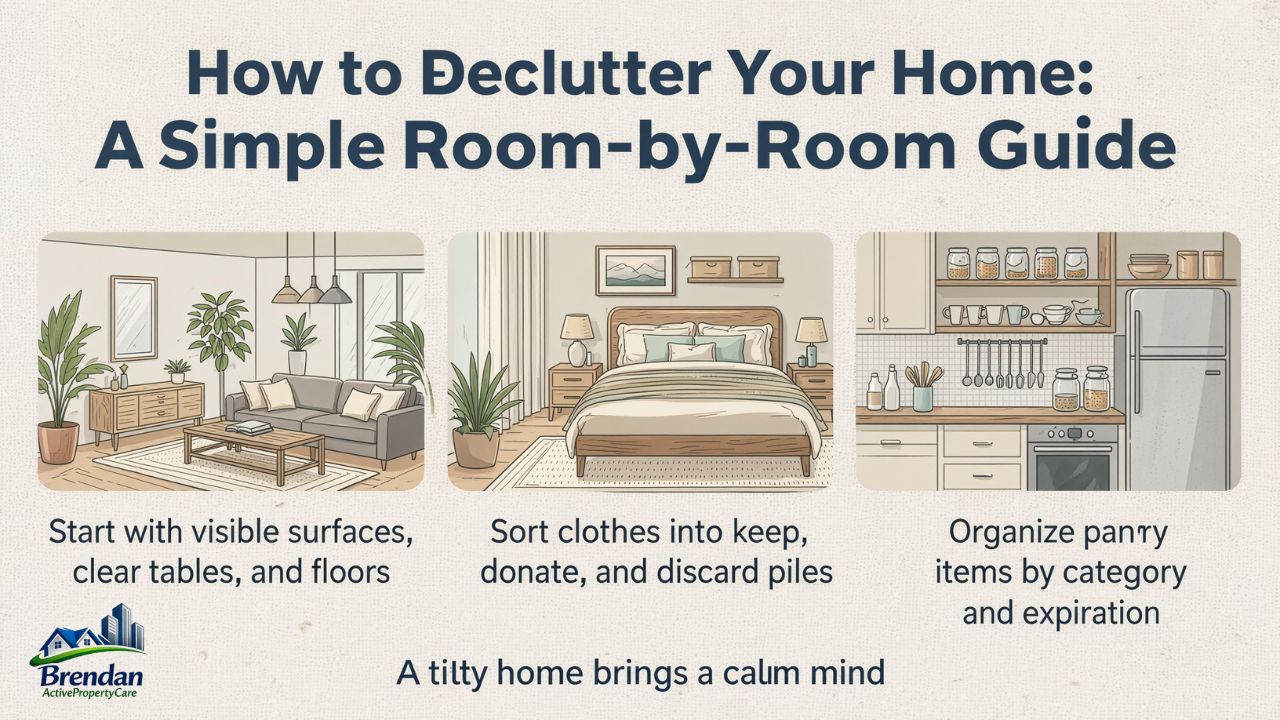
The living room collects daily clutter because everyone uses it. Start with visible surfaces.
Remove:
- Old magazines
- Extra remote controls
- Broken decor
- Random chargers
- Toys that belong elsewhere
- Unused candles or ornaments
Keep only the items that match how you use the room. If your living room is for relaxing, avoid turning it into storage.
Use baskets for blankets, trays for remotes, and shelves for books. A clear coffee table can change the whole mood of the room.
Kitchen
The kitchen is one of the easiest places to overfill. Expired food, unused gadgets, duplicate mugs, and plastic containers often take over.
Start with one cabinet. Check dates on food, spices, sauces, and baking items. Throw away anything expired or stale.
Then check tools. If you never use the waffle maker, extra blender, or six duplicate spatulas, they may not deserve space.
A practical kitchen should make cooking easier, not harder.
Bedroom
Your bedroom should feel restful. Clutter makes it harder to relax.
Start with bedside tables, dresser tops, and the floor. Then move to clothing.
Try this rule: if it does not fit, feel good, or match your current life, let it go.
Common bedroom clutter includes:
- Clothes you avoid wearing
- Old shopping bags
- Unused beauty products
- Random paperwork
- Damaged accessories
- Extra bedding you never use
Closet
Closets can hide years of delayed decisions. Take out one category at a time: shirts, pants, shoes, bags, or seasonal clothes.
Do not empty the whole closet unless you have enough time and energy.
Keep clothes that fit your body, lifestyle, and taste now. Not your old life. Not your “maybe one day” life.
A helpful closet table:
| Item Type | Keep If | Let Go If |
|---|---|---|
| Clothes | Fits and feels good | Too tight, damaged, or never worn |
| Shoes | Comfortable and used | Painful, broken, or forgotten |
| Bags | Useful and clean | Peeling, unused, or duplicated |
| Accessories | Worn often | Tangled, broken, or outdated |
Bathroom
Bathrooms often hold expired medicine, half-used products, old razors, empty bottles, and samples.
Check expiry dates carefully. Do not keep old skincare, makeup, or medicine “just in case.”
Group items by use:
- Daily care
- Hair products
- Dental care
- First aid
- Cleaning supplies
Use small bins so items do not spread across shelves.
Home Office
Paper clutter grows fast. Sort documents into action, archive, scan, shred, and recycle.
Keep only documents you need for legal, tax, medical, property, or financial reasons.
Clear your desk first. A clean desk helps you focus quickly.
For digital clutter, clean your downloads folder, desktop, and old screenshots. Decluttering is not only physical.
Kids’ Room
Kids’ rooms need simple systems. Too many toys can make playtime stressful.
Sort toys into:
- Favorites
- Broken items
- Outgrown toys
- Missing-piece toys
- Donation items
Use low baskets or open bins so kids can clean up without help. Rotate toys if there are too many.
Garage, Store Room, or Laundry Area
These spaces often become “deal with it later” zones.
Look for:
- Broken tools
- Empty boxes
- Old paint
- Unused sports gear
- Duplicate cleaning products
- Holiday items you no longer use
Be careful with chemicals, batteries, paint, and electronics. Dispose of them safely according to local rules.
What to Keep, Donate, Sell, or Throw Away
When learning how to declutter your home, the hardest part is deciding what stays.
Use this simple guide:
| Decision | Best For |
|---|---|
| Keep | Used often, needed, loved, or meaningful |
| Donate | Clean, working items with low resale value |
| Sell | Valuable items in good condition |
| Recycle | Paper, cardboard, glass, metal, or electronics where possible |
| Trash | Broken, dirty, expired, or unsafe items |
| Do not make selling a trap. If you keep items for months waiting to sell them, they are still clutter. Set a deadline. |
Smart Storage Ideas That Actually Work
Storage should not hide clutter. It should make useful items easier to find.
Good storage is simple, visible, and easy to maintain.
Use Clear Categories
Store similar items together. Batteries with batteries. Cables with cables. Cleaning supplies with cleaning supplies.
When categories are mixed, clutter returns fast.
Use Vertical Space
Shelves, hooks, wall racks, and over-door organizers can free up floors and counters.
This works well in small homes, apartments, kitchens, bathrooms, and laundry rooms.
Label Only Where Needed
Labels help in shared spaces. They are useful for pantry jars, toy bins, office files, and storage boxes.
Do not over-label everything. The goal is ease, not perfection.
Avoid Buying Bins Too Early
Many people buy storage boxes before decluttering. Then they store things they should have removed.
Declutter first. Buy storage only after you know what is staying.
Common Decluttering Mistakes
Even motivated people get stuck. These mistakes are common and easy to avoid.
Starting Too Big
Trying to declutter your entire house in one day can feel exciting at first, then exhausting. Start with one area.
Keeping Items Out of Guilt
Gifts, expensive purchases, and family items can carry guilt. But your home is not a museum for past decisions.
Moving Clutter Around
If you move clutter from the bedroom to the garage, you have not solved the problem. You only changed its location.
Waiting for Perfect Motivation
You may never feel fully ready. Start anyway. Ten minutes can change the feeling of a room.
Organizing Before Removing
Organized clutter is still clutter. Remove first, organize second.
How to Keep Your Home Clutter-Free
Learning how to declutter your home is only the first part. The real win is keeping it that way.
Use a few gentle habits instead of strict rules.
Follow the One-In, One-Out Rule
When you buy something new, remove one similar item. New shoes mean one old pair leaves. New mug means one unused mug goes.
Do a 10-Minute Evening Reset
Spend ten minutes returning items to their homes. This keeps small messes from becoming weekend stress.
Keep Donation Bags Ready
Place one donation bag in a closet or laundry area. When you notice something you no longer use, drop it in.
Review Hot Spots Weekly
Hot spots are places where clutter always returns: entry tables, kitchen counters, chairs, desks, and bedside tables.
Clear them once or twice a week.
Shop More Slowly
Before buying something, ask:
- Where will I store it?
- Do I already own something similar?
- Will I use it within the next month?
- Is this solving a real need?
This one habit can prevent a lot of future clutter.
Emotional Side of Decluttering
Decluttering can bring up memories, guilt, sadness, or fear. That is normal.
Some items are tied to people, seasons of life, or old dreams. You do not need to be harsh with yourself.
Keep meaningful items, but choose them with care. A small memory box is better than ten random boxes you never open.
In reality, decluttering is not about rejecting your past. It is about making room for your present life.
A Simple 7-Day Decluttering Plan
Here is a gentle plan you can follow without burning out:
| Day | Area | Task |
|---|---|---|
| Day 1 | Entryway | Shoes, bags, keys, mail |
| Day 2 | Kitchen | One cabinet and one drawer |
| Day 3 | Bedroom | Bedside tables and dresser top |
| Day 4 | Closet | One clothing category |
| Day 5 | Bathroom | Expired products and medicine |
| Day 6 | Living Room | Surfaces, toys, decor, magazines |
| Day 7 | Paperwork | Bills, receipts, documents |
| By the end of the week, your home will already feel lighter. |
How to Declutter Your Home When You Feel Overwhelmed
When the mess feels too big, shrink the task.
Try the “five-item rule.” Pick up five things and decide where they go. That is it.
You can also use a timer. Set it for 15 minutes and stop when it rings. This removes pressure.
Another helpful trick is to take a before photo. After one small session, take an after photo. Seeing progress makes the work feel worth it.
If you live with family, do not try to control everyone’s belongings at once. Start with your own spaces and shared surfaces.
Minimalism vs. Decluttering
Minimalism and decluttering are not the same.
Decluttering means removing what no longer serves you. Minimalism is a lifestyle built around owning less.
You can declutter without becoming a minimalist. Your home can still be warm, colorful, personal, and full of life.
The goal is not to own the fewest things. The goal is to own the right things.
FAQ
How long does it take to declutter a home?
It depends on the size of your home and how much you own. A small apartment may take a weekend. A full house may take several weeks. The best approach is steady progress.
What is the fastest way to start?
Start with one visible surface, such as a table, counter, or nightstand. Quick visual progress gives you energy to continue.
How to declutter your home without getting overwhelmed?
Work in small zones, use a timer, and make simple categories: keep, donate, sell, trash. Do not empty a whole room unless you can finish it.
Should I throw away sentimental items?
Not always. Keep the items that truly matter. For the rest, consider taking photos or keeping one small memory box.
What should I declutter first?
Start with trash, expired items, duplicates, and things you clearly do not use. These decisions are usually easier.
How often should I declutter?
Light decluttering once a week helps. A deeper room-by-room review every few months keeps your home manageable.
Is it better to donate or sell unwanted items?
Donate low-value items that are still useful. Sell items only if they are worth the time and effort.
Can decluttering improve mental health?
A cleaner space can reduce daily stress and make routines feel easier. It is not a cure for deeper problems, but it can support a calmer environment.
Conclusion
Learning how to declutter your home is not about chasing a perfect magazine-style space. It is about making your home easier to live in.
Start small. Choose one drawer, one shelf, or one corner. Make clear decisions. Let go of items that no longer fit your life.
Over time, these small choices create a home that feels lighter, calmer, and more useful every day.